
The 7 Most Dangerous Trees in Stellenbosch — And When You Should Remove Them
Stellenbosch is known for its beautiful, tree‑lined neighbourhoods — but some trees become dangerous as they grow, age, or get damaged by wind, storms, or pests. Knowing which trees pose the biggest risks can prevent property damage, injuries, and costly emergencies.
For professional help, visit our main service page:
Tree Felling Stellenbosch – Professional Tree Removal & Trimming
1. Eucalyptus Trees
Why they’re dangerous: Extremely tall, fast‑growing, shallow roots, and prone to snapping in strong Stellenbosch winds.
Remove when: Leaning, cracking, shedding large branches, or growing too close to homes, walls, or driveways.
2. Pine Trees
Why they’re dangerous: Heavy tops, weak lower trunks, and high fire‑risk during Stellenbosch’s dry season.
Remove when: Showing root lift, fungus, or leaning after storms.
3. Blue Gum
Why they’re dangerous: Massive branches that drop without warning — especially in Die Boord, Paradyskloof, and Dalsig.
Remove when: Branch shedding increases or tree is close to roofs, pools, or parking areas.
4. Willow Trees
Why they’re dangerous: Aggressive roots that crack pipes, drains, and foundations.
Remove when: Roots reach plumbing, pools, or boundary walls.
5. Poplar Trees
Why they’re dangerous: Weak wood, brittle branches, and fast decay.
Remove when: Bark splitting, hollow trunk, or visible rot.
6. Acacia (Black Wattle)
Why they’re dangerous: Invasive, unstable, and prone to falling during Stellenbosch’s winter storms.
Remove when: Growing in clusters, leaning, or showing root exposure.
7. Old Oak Trees
Why they’re dangerous: Stellenbosch is full of heritage oaks — but old ones rot from the inside and collapse without warning.
Remove when: Mushrooms appear at the base, trunk sounds hollow, or large branches die off.
Why You MUST Remove the Tree Stump Too
Most homeowners don’t realise: removing the tree is only half the job — the stump is often more dangerous than the tree itself.
Here’s why stump removal is essential:
- Stumps regrow aggressively — especially eucalyptus, poplar, and wattle.
- Roots keep spreading and can damage pipes, paving, and foundations.
- Termites and pests love old stumps and can move into your home.
- Trip hazards for kids, pets, and visitors.
- They attract rot and fungus which spreads to healthy trees.
For a full breakdown, read our stump‑removal guide:
Why Stump Removal Is Essential After Tree Felling in Stellenbosch →
When to Call a Professional
If a tree is leaning, cracking, dropping branches, or growing too close to your home, it’s time to call a professional. Stellenbosch has unique risks — wind tunnels, clay soil, estate rules, and fire season — so expert assessment is essential.
WhatsApp for fast quotes: 061 367 3287
Visit our Stellenbosch Tree Felling page →
The Hidden Dangers of DIY Tree Felling in Durbanville – What Homeowners Must Know
Tree felling may look simple… until it goes wrong. Here’s why Durbanville homeowners should avoid DIY tree cutting.
Why DIY Tree Felling Is Risky
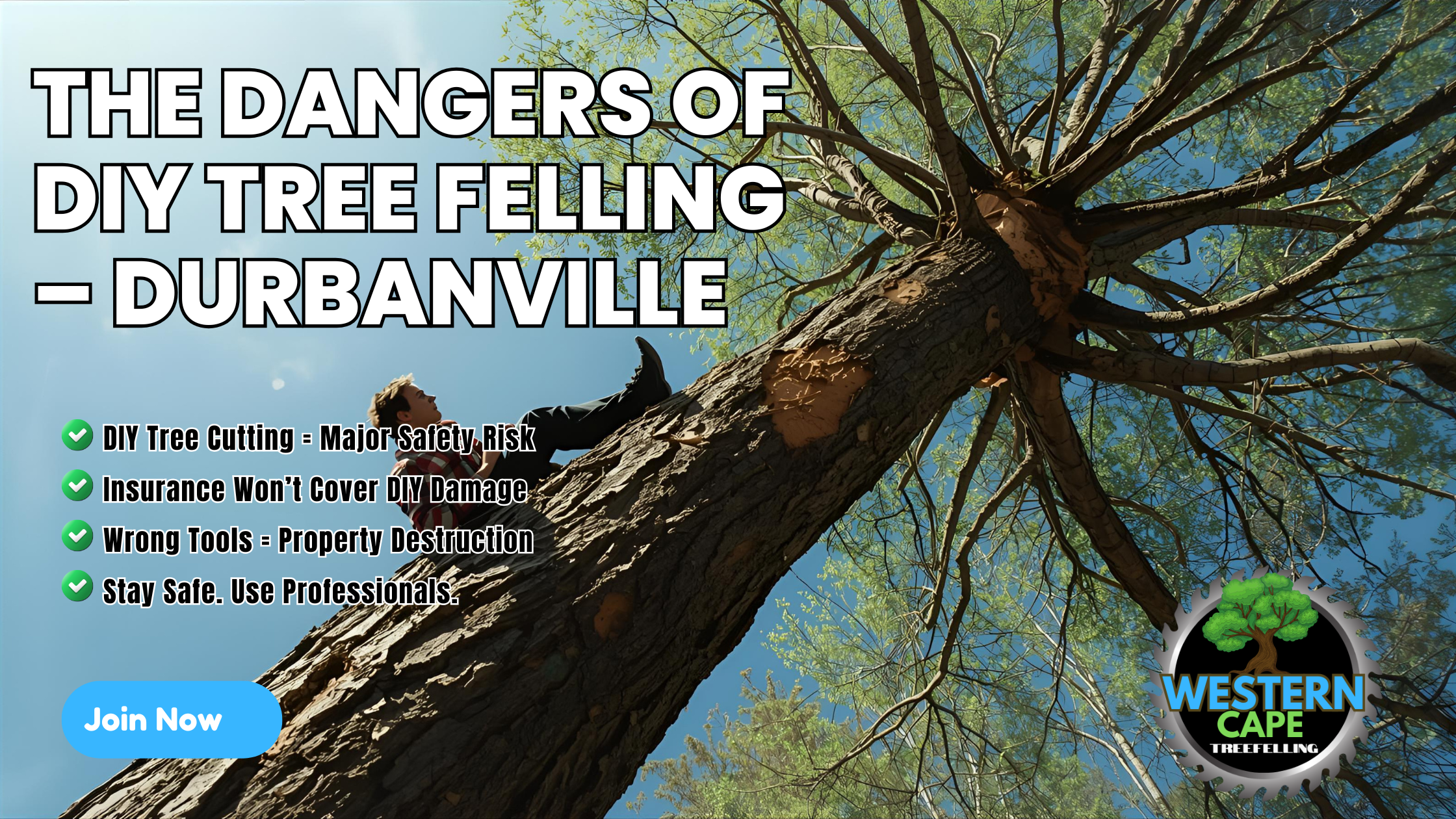
Across Durbanville, more homeowners are attempting DIY tree felling to "save money". But incorrect cuts, improper tools, and lack of experience can lead to severe injuries, property damage, or fallen trees landing in the road.
1. Serious Safety Risks
Tree felling requires proper cutting angles, ropes, wedges, and safety gear. A miscalculation can cause a tree to fall in the wrong direction—onto your home, car, or neighbours' property.
2. Insurance Won’t Cover DIY Damage
If you attempt DIY tree removal and cause damage, insurance companies usually reject the claim. They classify DIY felling as a voluntary risk.
3. Incorrect Tools = Disaster
Chainsaws kick back. Ropes snap. Unstable ladders collapse. Professional teams use industrial tools and rigging equipment designed for controlled felling.
4. You May Damage the Tree Roots or Soil
Cutting incorrectly can harm the soil structure or cause regrowth issues. Professionals know how to remove the tree safely, ensuring long-term garden health.
Related Article:
DIY vs Professional Tree Felling – Which Is Right For You?Need Safe, Professional Tree Felling in Durbanville?
Fully insured. Fast response. No risks.
📞 Call / WhatsApp: 061 367 3287
🌐 www.westerncapetreefelling.co.za